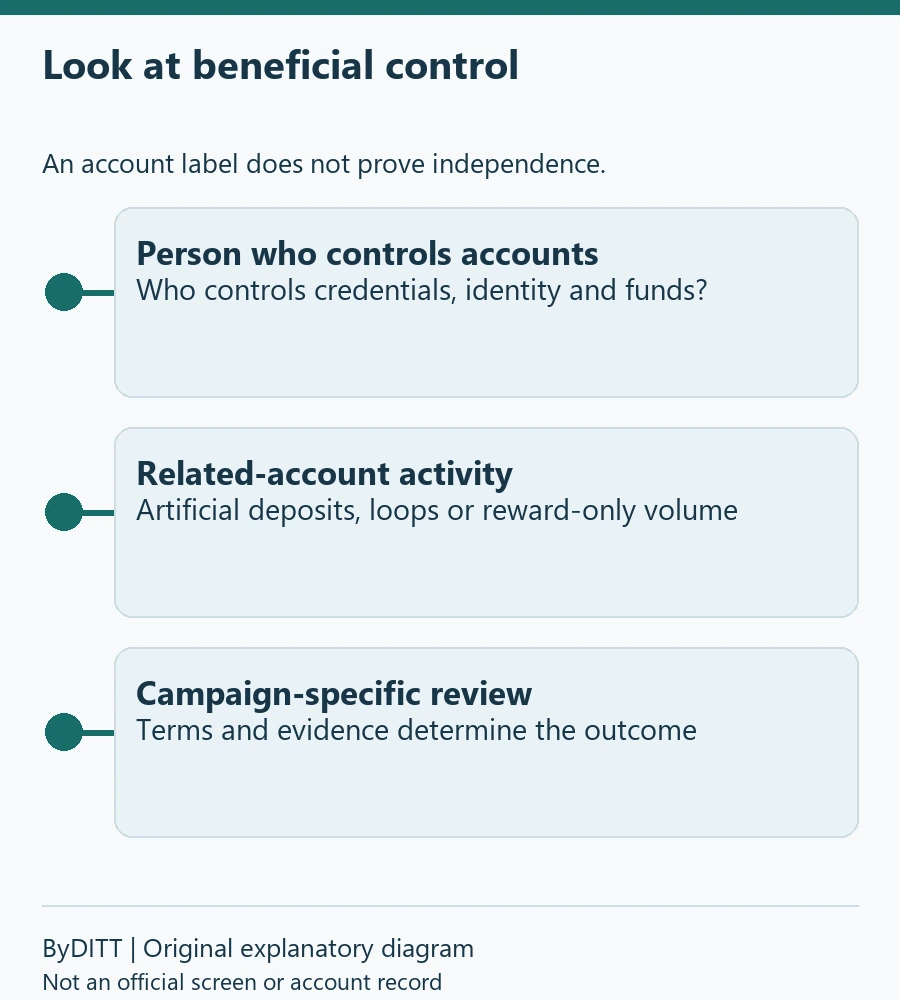
Last reviewed: October 25, 2026. “Self-referral” usually means controlling another account so your own activity generates referral rewards or commission. Specific Bybit campaign rules prohibit this and can disqualify rewards. A campaign exclusion is not, by itself, evidence that every related account receives the same platform-wide penalty; the applicable terms, actual control and account review matter.
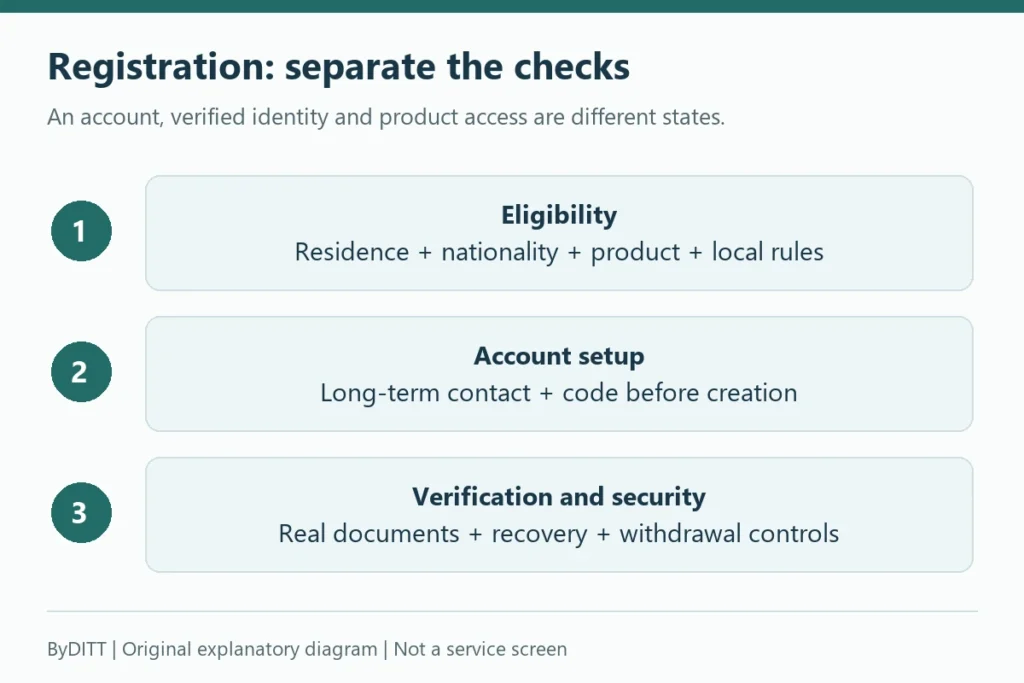
Affiliate disclosure: ByDITT is independent from Bybit and may receive compensation through BYBITDC. This page does not encourage self-referral, duplicate-account farming, identity sharing, or evasion of campaign controls. Use a code only for a genuine eligible new account controlled by the real user.
What official Bybit sources say
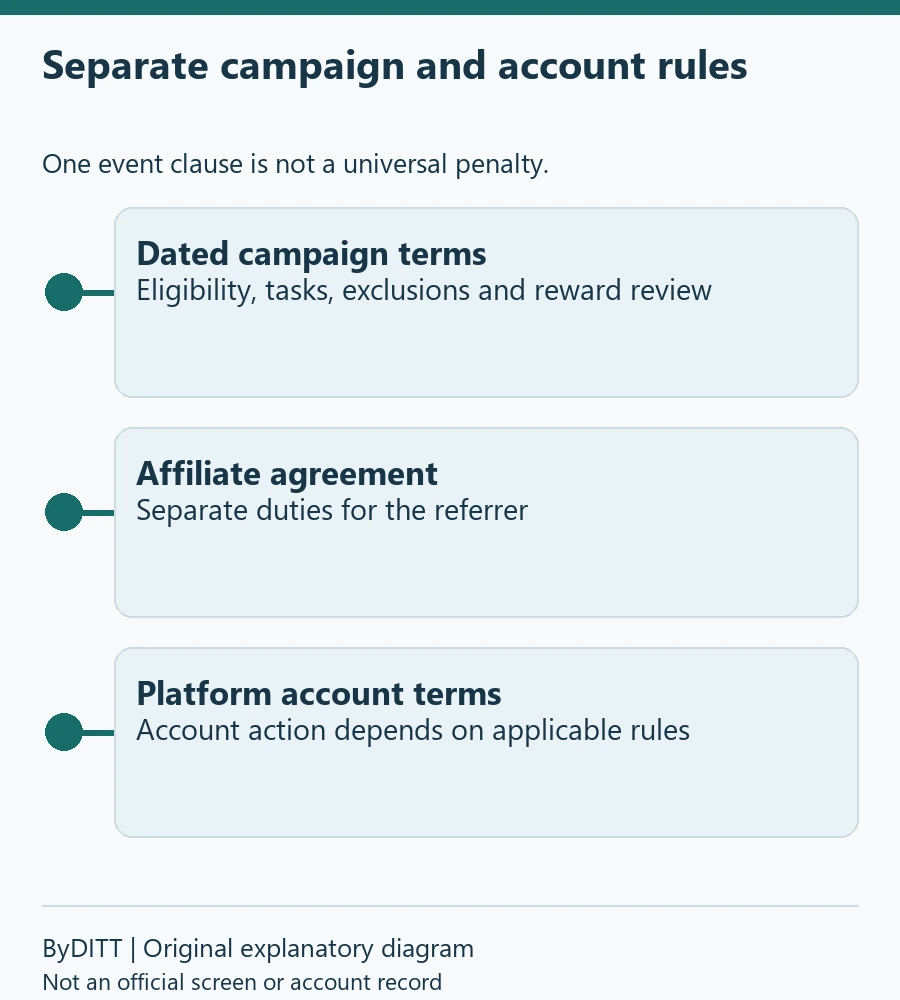
Bybit’s Referral Program FAQ distinguishes reward eligibility from general account use. For a dated example, the Community Exclusive referral announcement, published June 23, 2026, states a campaign period of June 23, 2026, 10:00 UTC to July 10, 2026, 23:59 UTC. Its clauses 9–10 prohibit self-referrals, duplicate accounts and fraudulent or abusive activity, with disqualification for abuse. That event has ended; it is historical evidence of a campaign rule, not a current reward offer or a universal account-closure rule.
Bybit’s Affiliate Program Terms govern affiliates separately. They should be read together with the campaign terms and general platform terms that apply to the account.
Separately, the Referral League terms, checked October 25, 2026, name self-referrals, duplicate identity or KYC, subaccount loops and suspicious device or IP activity as disqualification conditions, and exclude affiliates from that event. The inspected text did not establish the active event dates; do not infer a currently available reward. These are that event’s terms, not a determination of any reader’s account status.
Do not invent a fixed penalty
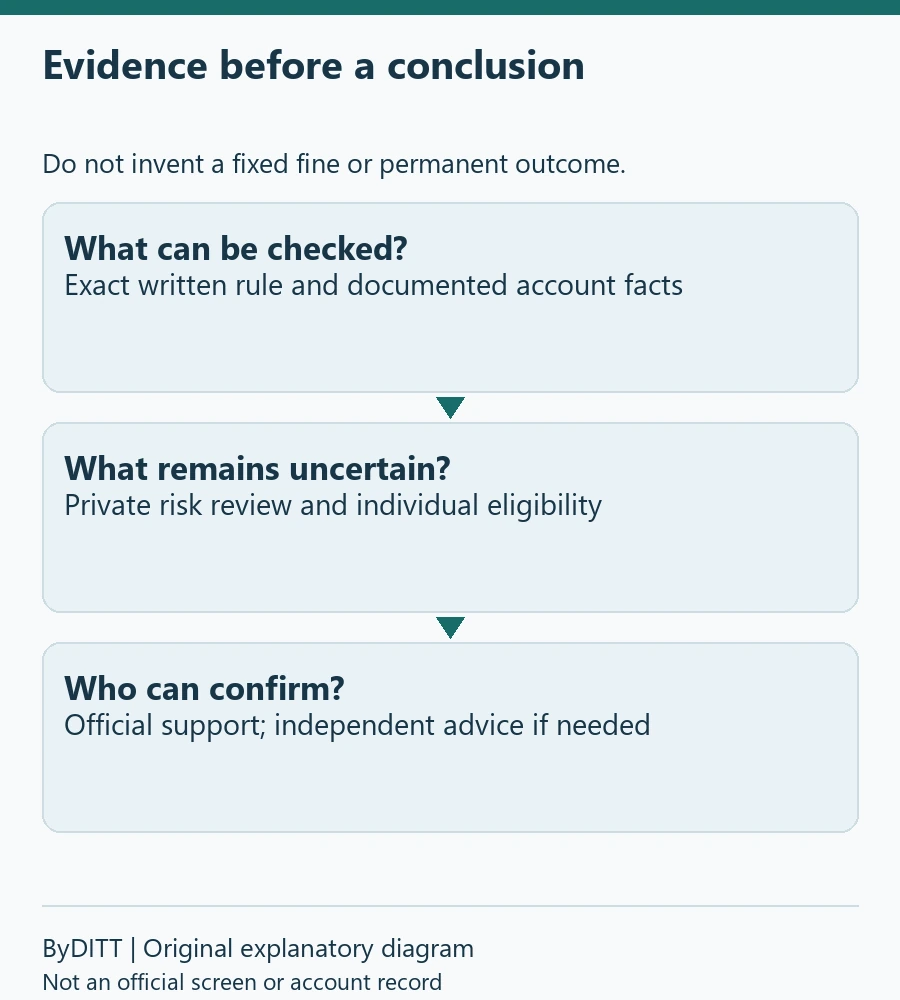
It is inaccurate to claim that every suspected self-referral automatically causes a “permanent shadow ban,” a fixed fine, or one universal account outcome. The consequence depends on the applicable terms, evidence, campaign, risk review, account relationship, and Bybit’s decision.
- Referral or campaign rewards may be withheld, revoked, or marked ineligible.
- Related activity may be excluded from qualifying deposits or trading volume.
- An account or affiliate relationship may be reviewed or restricted under applicable terms.
- Bybit may request additional identity or source-of-funds information.
- Serious or repeated abuse can lead to stronger action under the platform agreement.
These are possible categories of action, not a prediction for a specific account. Only Bybit Support or the relevant risk team can confirm an account’s status.
Examples of high-risk behavior
- Opening another account with the same beneficial owner to generate commission
- Using another person’s identity documents while controlling the account or funds
- Moving the same funds through related accounts to satisfy deposit tasks
- Using subaccounts, device changes, VPNs, or IP changes to disguise common control
- Executing wash trades or unnecessary volume only to create a referral reward
- Buying or renting accounts, KYC identities, devices, or referral attribution
- Coordinating withdrawals or trades that have no genuine economic purpose
Why the fee saving is often illusory
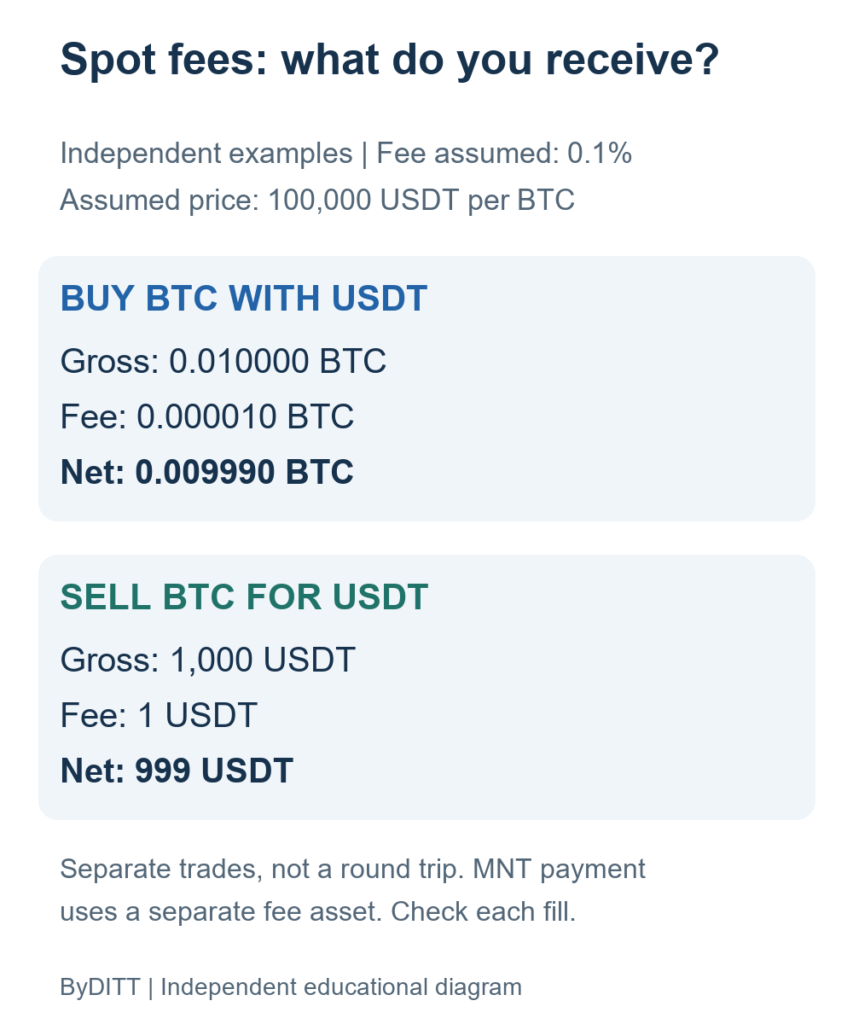
A referral commission is not free money. Creating artificial volume produces trading fees, spread, slippage, funding, tax records, market exposure, and the risk of disqualification. Increasing leverage or trade count to earn a reward can cost more than the reward and can trigger liquidation.
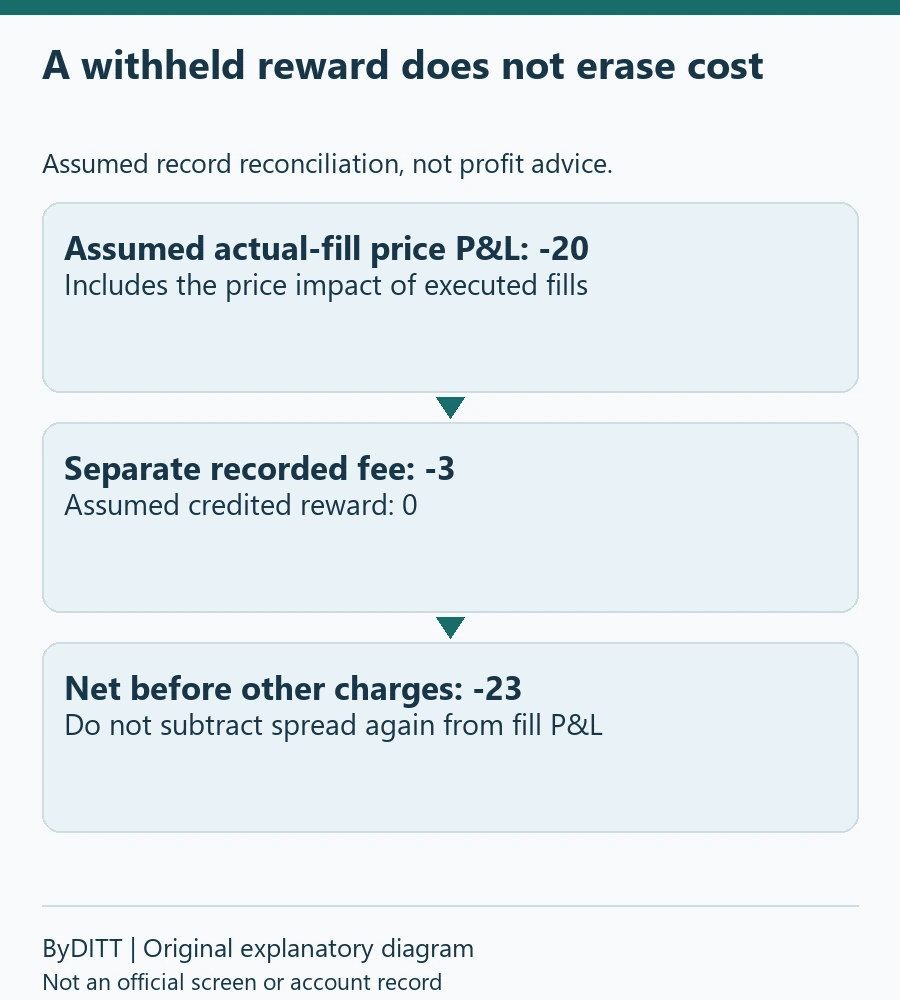
Independent assumed example: actual-fill price P&L of −20 USDT, a separately recorded fee of 3 USDT and a credited reward of 0 give −23 USDT before any other financing, tax or operating charges. Actual-fill P&L already reflects the executed entry and exit prices: do not subtract spread or slippage again. If instead estimating from a mid-price benchmark, identify that different basis and its execution-cost assumptions explicitly. This is a reconciliation example, not a profit forecast.
If any reward is withheld after risk review, the costs remain. Do not trade merely to hit a referral threshold.
Legitimate ways to reduce trading cost
- Check the account-specific rate in My Fee Rate.
- Use Bybit’s current VIP schedule only if normal activity qualifies; do not manufacture volume.
- Use maker orders when appropriate and understand that execution determines maker or taker status.
- Reduce unnecessary turnover and avoid overtrading.
- Include funding, borrowing interest, swap, spread, and withdrawal costs in the comparison.
- Use valid fee savers or campaign rewards only under their current written terms.
Bybit’s Trading Fee Structure is the starting point, but actual rates vary by product, VIP tier, account, and region.
If you already used a related account
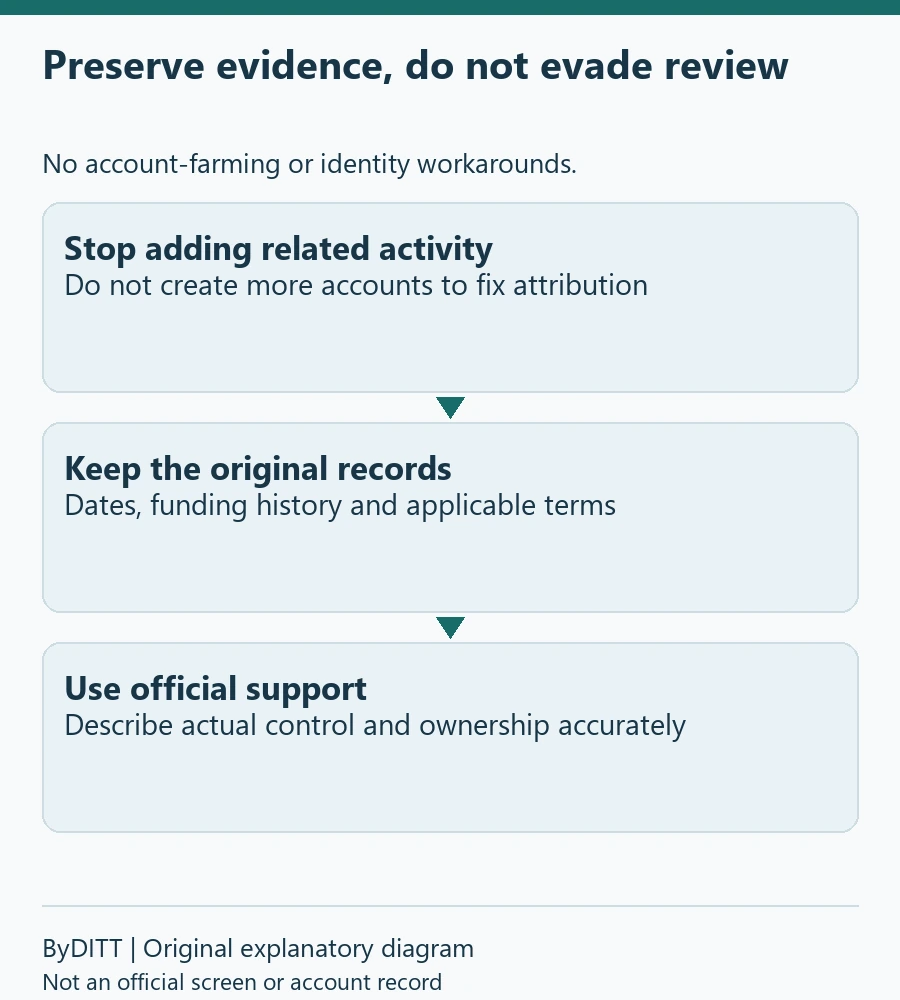
- Stop creating new related accounts or additional referral activity.
- Do not move or delete records to make the activity harder to review.
- Save account IDs, registration dates, funding records, and the campaign terms.
- Use the official Bybit Support channel and describe the beneficial ownership and account relationship accurately.
- Follow the response from Bybit rather than an affiliate’s workaround.
- Seek independent legal or tax advice if significant money or regulatory obligations are involved.
Independent referrals and common-control boundaries
- An independent person makes their own account and service decisions; a referral label does not prove independence.
- Do not control the person’s credentials, KYC, deposits, or trades.
- State the affiliate relationship and avoid guaranteed reward claims.
- Provide the current campaign terms and deadline.
- A reward does not justify a deposit or trade, and no person should be pressured to meet a referral threshold.
- Keep private information out of messages, forms, and screenshots.
Using BYBITDC
BYBITDC should be used only by an eligible user who independently chooses the code. It is not a method for self-referral, duplicate-account farming, or evasion of an existing referral relationship.
Official references
This article is educational and does not provide legal, tax, or investment advice. Bybit alone determines campaign eligibility and account action under the applicable terms.